Volume 3, Issue 1. 2025

Cover Image Cynkar, Figure 1. Samples of Cloth, Assembled in North America; c.1861-1865, Cotton and wool-cotton blend on paper, 2014.0008 A museum purchase with funds drawn from the Centenary Fund.
Material Matters
Memory and Material Culture
Feature Essays:
Katie Cynkar
Esme Krohn
Research on the Rise:
Gabbie Mangaser
Janine Napierkowski
Reviews:
Laini Farrare
Mary Kate Smolenski
More Articles:

In this piece from the 2022 Tools of the Trade symposium, the author analyzes how artists James Luna and Wendy Red Star utilize their bodies to subvert stereotypes through their representation of systemic issues, museums, and Indigenous presence. Using a decolonial and feminist lens, the piece deconstructs how the works of Luna and Red Star allow the artists to play with Indigenous stereotypes in different ways to create their own versions of themselves, through the portrayal and use of the body alongside their culture.
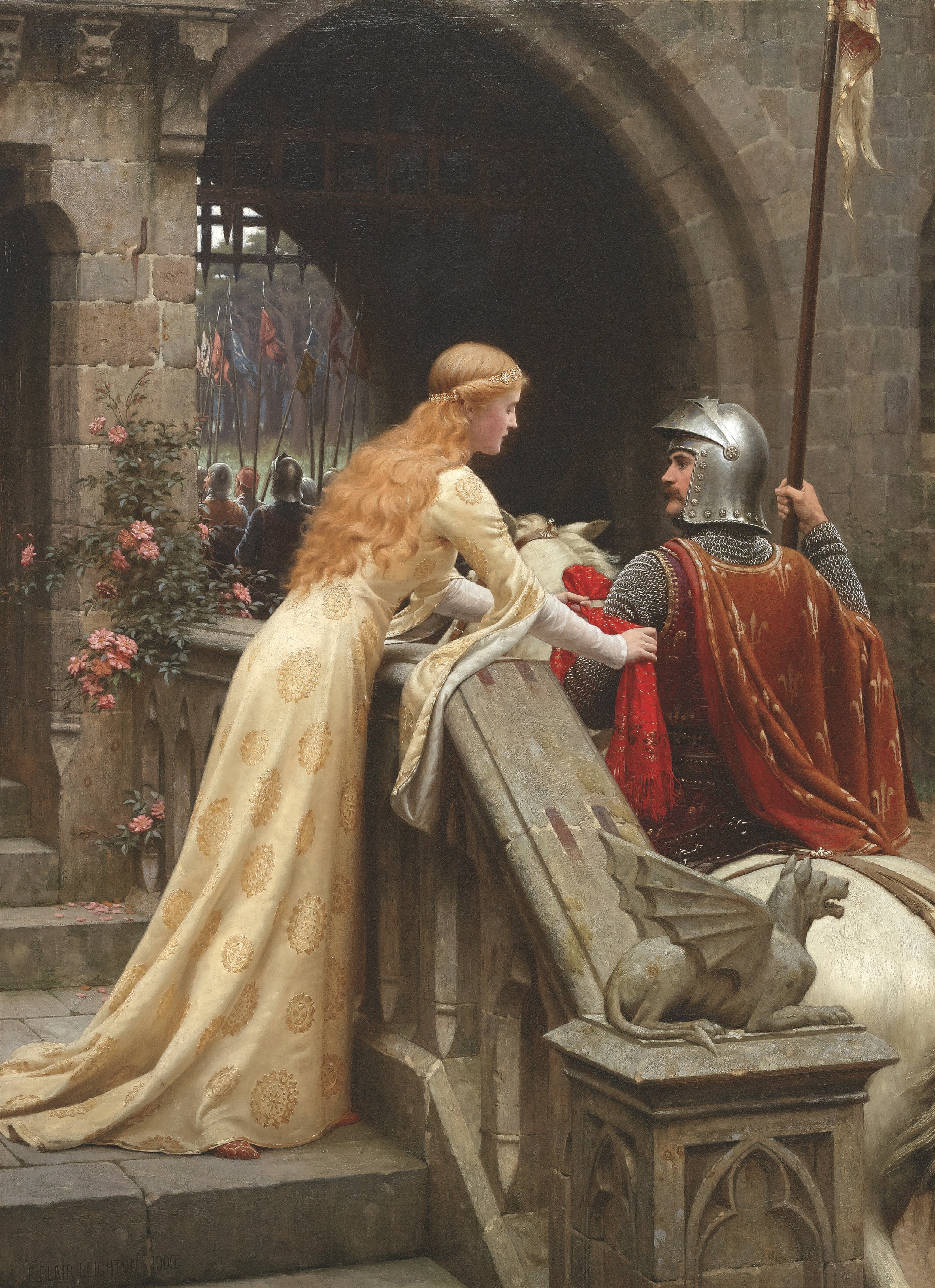
Abstract: In the final part of this serialization, Krehbiel explores how the romance literature of the medieval period interprets and romanticizes reality through the lens of Arthuriana as a nostalgic, fantastical setting. This addresses the broad themes of romance literature, its origins, and authorship. Romances were written by the troubadours, who either were knights or worked for knights, and they wanted to aggrandize knighthood to their audience, who were also knights. Additionally, the themes of courtly love and chivalry, which define the genre as a whole are important to this discussion. In this piece, the actions and stories of Arthur’s knights, as shown in medieval literature, will be compared to those of real knights. Primarily, this uses works of romance from England and Northern France during the late 12th to mid-13th centuries. These sources will be used in direct comparison of monographs which focus on knights, as well as primary source documents relating to warfare and chivalry. These stories all presented supposedly ideal knights which strictly adhered to codes of chivalry and courtly love that, as we will see, were not followed by actual knights.
In Part one of this three-piece serialization, this piece will compare and contrast fictional knights to their real-life counterparts living around the same time and place as when the legends were written. Primarily, this is in England and France from the mid-twelfth to the early fourteenth centuries. This analysis discusses the ways the literature from this period created an ideal knight that, while inspired by the knights living during this time, was very different.
Furthermore, this paper explores the influence this literature had on knights and their culture. In order to address the differences between fictional and real knights, part one discusses the historical reality of the archetypal knight. In this case, who were knights historically, what did they do, and what was their role in medieval society. While this is a broad topic and covers many centuries and an entire continent, for the sake of simplicity this paper focuses on western Europe, namely England and France from the eleventh to the fourteenth centuries. While some documents found in this research may fall outside of that purview, that is because the question of the development of knighthood is pertinent to this discussion. Furthermore, it should be noted that because knighthood was so quintessentially European, it existed and spread across the continent.
In Part one of this three-piece serialization, this piece will compare and contrast fictional knights to their real-life counterparts living around the same time and place as when the legends were written. Primarily, this is in England and France from the mid-twelfth to the early fourteenth centuries. This analysis discusses the ways the literature from this period created an ideal knight that, while inspired by the knights living during this time, was very different.
Furthermore, this paper explores the influence this literature had on knights and their culture. In order to address the differences between fictional and real knights, part one discusses the historical reality of the archetypal knight. In this case, who were knights historically, what did they do, and what was their role in medieval society. While this is a broad topic and covers many centuries and an entire continent, for the sake of simplicity this paper focuses on western Europe, namely England and France from the eleventh to the fourteenth centuries. While some documents found in this research may fall outside of that purview, that is because the question of the development of knighthood is pertinent to this discussion. Furthermore, it should be noted that because knighthood was so quintessentially European, it existed and spread across the continent.

The survey photographs of Timothy O’Sullivan have long been associated with the canon of American photography and the material culture of the later nineteenth-century that precipitated artistic modernism. O’Sullivan’s photographs are renowned for their rendering of the harsh desert landscapes of the American Southwest and the particular attention they pay to the geological features of the terrain. In the critical literature, debate about whether the photographs are to be seen as objects of artistic expression or scientific documentation has preoccupied the scholarship. Such a framing, however, distorts O’Sullivan’s more complicated engagement with the materiality of the landscape conceived in evolutionary terms as a dynamic process that changes over time to which the photographic apparatus comes into material relation as a capture of light in duration. This article argues that O’Sullivan’s interest in the materiality of the earth and in photography as a material process originates in an earlier nineteenth-century dialogue between geological science and American landscape painting. The article demonstrates how the visual culture of the American West is part of this relationship and how O’Sullivan’s photography belongs to this wider interest in the material formation of the earth in nineteenth-century American culture. With this historical perspective in mind, the paper argues that O’Sullivan’s photographs exhibit a proto-ecological awareness of the landscape as raw material and subject matter, as well as comment on the relation between photography and nature. More broadly, the article suggests that the problem of materiality, usually associated with twentieth-century art theory, has its origins in the scientific culture of the nineteenth-century, when the distinctions between scientific, utilitarian, and artistic objects were blurred

This piece takes a new look at the second Ku Klux Klan by utilizing the lenses of material and visual culture. Previous scholars have addressed the Klan as a business, such as Charles Alexander, Nancy Maclean, and Kathleen Blee. However, their research did not focus primarily on the manufactured materials, literature, and regalia produced by the Klan. Using 20th -century material culture as a lens for analysis is critical in understanding how collective groups of people relate to one another through objects and shared ideologies. This piece argues that focusing on the visual and material culture produced by the Klan opens new insights into the second iteration of the KKK. Primarily, the piece examines manufactured cultural items such as catalogs, brochures, newspapers, photos, and propaganda produced by and for the Klan. The central aims are twofold: to explain the cultural importance of the visual and material cultural objects and to show how the Klan was able to use merchandising to fund its “Invisible Empire.”

Using Deborah Roberts’ photocollage works as a lens, this article contemplates the influence of Eurocentric standards of beauty and stereotypes of Blackness on identity formation as represented by the child subject. Deborah Roberts reappropriates found images and materials from magazines, the internet, and her daily life to bring attention to the historic and continued treatment of the Black body within the realm of cultural production and to the vulnerability of children to the resulting conditions of objectivity and suppression. Theories of intersectionality highlight that women and children are susceptible to multiple layers of oppression as part of a minority race and subordinated gender.[1] Roberts’ focus on children brings attention to another regularly overlooked layer of subjugation and bias, as young people’s identities are in a highly developmental state that is often the most susceptible to ideas promoted by the masses. By emphasizing and subverting the original intentions of her materials and reinventing them as works of fine art, Roberts gives power back to her young Black subjects.

In 1809, Dolley Madison and architect Benjamin Henry Latrobe embarked on extensive efforts to transform the White House interiors into spaces ladened with significance. Throughout the first term of the Madison administration, thousands of Americans witnessed their work while attending weekly parlor gatherings. However, nearly all the materials they saw were burned by the British in 1814. Using correspondence, business ledgers, and the few surviving furnishings, historians have since sought to reconceptualize the Madison White House parlors and the messages that they conveyed. This study builds on such work by exploring the uniqueness of white women’s interactions with these interiors. A closer look reveals that at the parlor gatherings, white women took in material-based messages that played a significant role in their ability to negotiate their political and social standing in the new American republic.
Hidden away at Winterthur is an archeological fragment collection donated by Mrs. Cazenove G. Lee in 1968 and 1969. The collection includes approximately 139 objects, primarily excavated, a term used loosely in this context), in early twentieth-century Virginia at Lee family homes. They are cataloged under collection numbers 1968.0312-0336 and 1969.0048-56, but this paper focuses on three objects: a stone, a pair of shingles, and a brick. As pieces collected following the destruction of the Civil War in a collection that largely ignores the southern United States, these fragments serve Winterthur as a means of preserving the destruction of the South, in contrast with the decorative arts that make up most of the museum’s collection. Additionally, many of these bricks, stones, ceramics, and glass pieces were likely crafted by enslaved Black workers, an ever-hidden legacy in the museum's collection. Eure starts by addressing the collection itself and the mythos around the Lee family and the fragment’s history. Then, she addresses the popularization of taking objects from the South in the economically unstable post-Civil War years. These fragments differ from the “pillaging the south” narrative for two reasons: First, the fragments were donated by a member of the Lee family, and second, the archaeological fragments are much more mundane than the rest of the objects held by Winterthur and are not on view. The fragments were accepted as part of the collection specifically to be a part of the study collection, according to the acquisition files. As fragments of what we might traditionally see at Winterthur, collected from elite properties, this collection of objects is a unique look into the role of archaeological fragments in material culture studies and the politics of legacy building.